Slab leak: what to do first
A slab leak is urgent when water appears at the floor, when a warm spot develops or when the meter spins quickly.
This stops the leak immediately. Hot water lines may take a moment to drain.
Water under a slab can follow a path away from the leak, so the wet spot may not be above it.
A slab leak on a hot line may make the heater run constantly. Turn it off if the main is closed.
Warm floor, damp carpet edges, a sound of running water and a high bill all help us find it.
Signs of a slab leak
A warm or hot spot on the floor
Hot water line leaking beneath the slab heats the concrete.
Water sound with nothing running
A hiss or trickle inside the floor or wall.
Damp flooring or lifting tile
Moisture rising through grout lines or under carpet.
Unexplained jump in the water bill
Slab leaks run constantly and show on the meter.
Low hot water pressure
A drop in hot flow at fixtures far from the heater.
Cracks in walls or floor
Long-term leaks can soften soil and shift the slab.
Repair options for a slab leak
| Option | How it works | Best when |
|---|---|---|
| Spot repair through the slab | Break a small section of concrete, replace the failed pipe and restore the floor | One leak, clear location, accessible. |
| Reroute the line | Abandon the slab pipe and run a new line through walls or the attic | Repeat leaks or hard-to-reach pipe. |
| Repipe the house | Replace the water lines throughout | Several leaks or aging pipe. |
| Epoxy pipe lining | Coat the inside of the existing pipe | Early pinhole leaks and sound pipe. |
Which option fits depends on pipe age, the number of leaks and what finished flooring is above. See repiping if the pipe is failing in several places.
Water noise under the floor?
Close the main valve and call. The line is open all night.
How we pinpoint the leak before cutting anything
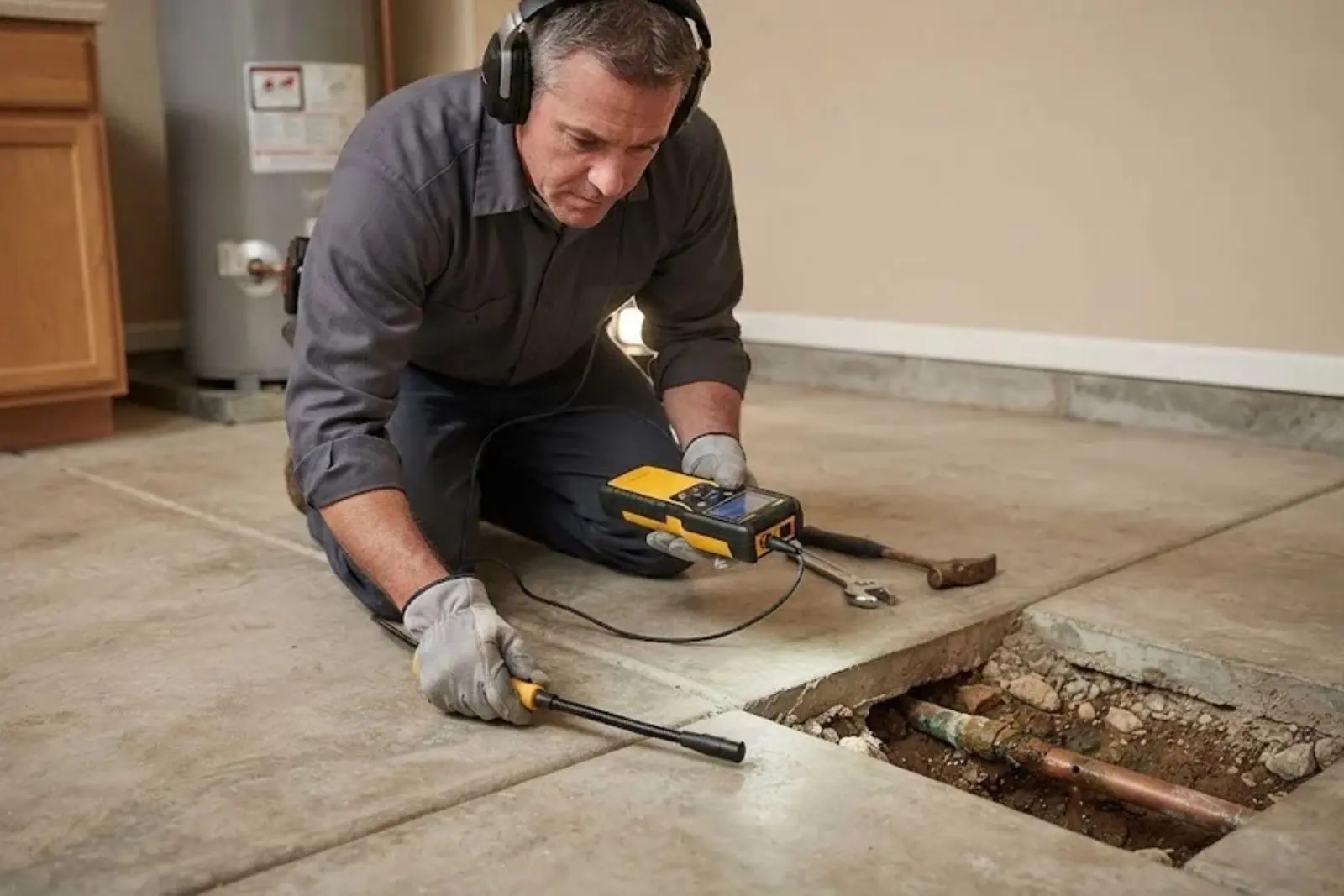
A slab leak is not always under the wet spot, so cutting there often finds nothing. We close the main and run a pressure test to confirm a supply leak, then use acoustic listening, thermal imaging and a line locator to mark the point. If more than one line runs near the leak, we isolate each.
This is a diagnostic job. For general leak detection on pipes you can reach, see leak detection. We only open the slab at a point we have confirmed.
What the City of Milpitas requires for the repair
The city says replacing or installing water piping within a building needs a plumbing permit, and that extensive removal of walls or ceilings needs a building permit. Rerouted piping must follow the California Plumbing Code table for materials, and the city expects a pressure test held for at least 15 minutes with rough and final inspections.
Leak repairs that do not replace or rearrange pipes are exempt, according to the city's Building Safety FAQ, but a reroute or a repipe is new work. We tell you which side of the line your job falls on.
What drives the price of slab leak work
We quote after we find the leak.
Insurance may cover the access and restoration after a sudden leak and not the pipe. Policies vary, so ask your agent before work starts.
Sources for the permit rules
According to the City of Milpitas Office of Building Safety, rerouted or replaced water piping follows the material table in the California Plumbing Code, which is based on the Uniform Plumbing Code (UPC). The pressure test is held for at least 15 minutes, with rough and final inspections.
Common Questions
Yes. Close the main valve and call the 24/7 line. We schedule detection as soon as a technician is available.
We pressure test the supply lines and use acoustic and thermal tools. A confirmed point lets us repair with a small opening.
A long-running leak can soften soil under the slab and cause movement. Fixing it early limits that risk.
Sometimes. A reroute avoids breaking floors and suits older pipe with repeat leaks.
It varies. Some policies cover access and restoration after a sudden leak but not the failed pipe. We provide a written report to support a claim.